It’s not only a diverse workforce that is needed to facilitate a deep sharing of knowledge and ideas. Inclusivity is just as important, and all employees should feel a shared sense of belonging which, in turn, enables them to feel comfortable, confident and inspired.
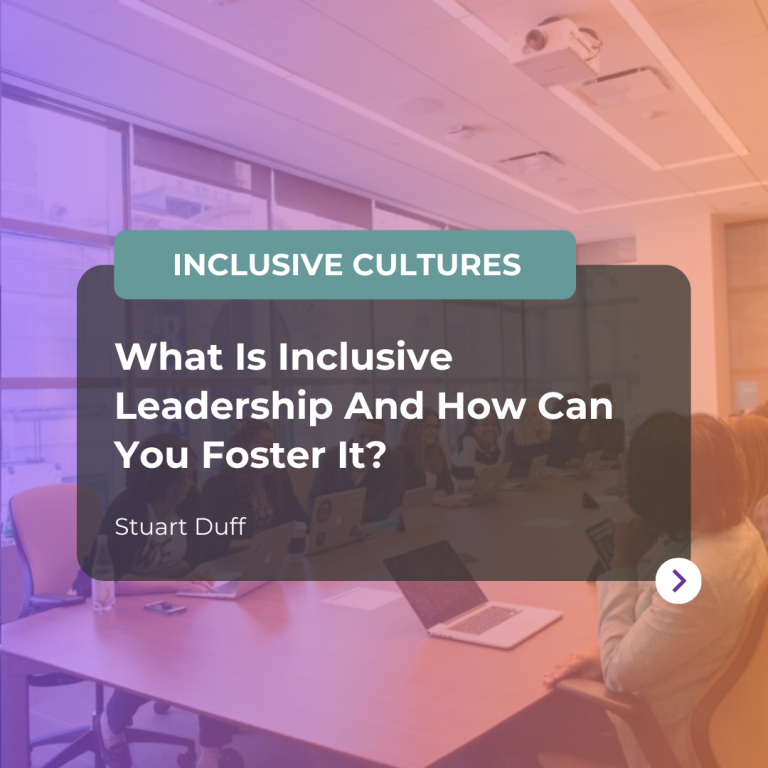
Leaders have a crucial part to play in ensuring its presence. But what is inclusive leadership? Inclusive leadership is, in essence, a management technique that helps all members of a team to feel as though they’re treated with respect and equality.
It may sound simple to implement, however, many employees, such as those from BAME (black, Asian and minority ethnic) backgrounds, often struggle. Being part of a minority in a crowd can both increase stress and have a profound effect on our behaviour as a whole. It can lead individuals to speak less or even withdraw totally from a situation, having a negative effect on their confidence. Some people feel this on a daily basis within their workplace, making them feel disconnected and excluded from the majority group.
Are you an inclusive leader?
For many leaders, identifying ways in which your actions and decisions will have significant consequences for minorities can be difficult. All human beings are biased in one way or another, whether they consider themselves to be or not. This is because we have created mental shortcuts to help us deal with decisions quickly, but it is those shortcuts that cause leaders to make decisions that are more subjective than objective – and are therefore not wholly inclusive.
How can you foster an inclusive culture?
Being an inclusive leader doesn’t have to be overly complicated. There are three key steps that can bring staff together, help them create new bonds and feel included.
1.Help your employees feel safe and valued
Groupthink theory demonstrates a key barrier to inclusion within the workplace. In essence, it is the feeling of uneasiness and tension that employees get when they disagree with the ideas that others are presenting, but don’t feel comfortable pitching an idea of their own. Preventing employees from expressing their own ideas and creativity, groupthink can leave some staff feeling isolated and undervalued.
As an inclusive leader, it’s your job to ensure that employees can share their opinions without fear that they will be labelled as rude or disruptive. Inviting staff who are more reserved with their opinions to speak up is a vital but simple way to tackle this issue.
Publicly recognising the successes of the individuals who deserve it can be another great way to help employees in minority groups feel valued. Highlighting their strengths and capabilities can improve confidence and foster a feeling of self-worth.
2. Assess your relationships with various team members
Without meaning to, we’re able to form positive relationships more easily with people who we perceive as being similar or having something in common with us, but this isn’t a justifiable basis for building workplace relationships. One of the most important qualities of an inclusive leader, therefore, is being aware of both personal biases and those that stretch throughout the business.
Within an organisation, it’s vital to build relationships with others who are different to you, offering a fresh perspective and a different outlook on ideas. Analysing your relationships and identifying people who might bring value to your team or project but are often left out can bring huge benefit, not only to the individuals – who will feel more included – but also to the business as a whole, which benefits from increased creativity and better decision-making.
Sharing your experience and insight with under-represented groups can help employees feel valued and trusted, too.
3. Consider your office environment
Being an inclusive leader isn’t necessarily all about engaging with staff personally, but can involve improving your office environment as well. Having a communal space within your office is a great way of improving relationships between co-workers, allowing them to take their breaks away from their desk and interact with individuals that they don’t usually work with.
One of the main reasons this is so important is that we work best with colleagues who we trust. It’s difficult to get to know co-workers over email or even in a face-to-face meeting, though. We need genuine human interactions to read others and connect on a personal level. Being trusted in a job also makes a huge difference to how included we feel within an organisation.
Similarly, livening up the office environment and allowing employees to get involved and network between themselves can make staff who previously felt undervalued and unincluded feel part of the wider team. Putting on non-work activities like a sports day or company trip can help individuals communicate with co-workers and enables them to be part of a new team.
Leadership is tough. There’ll never be a single, straightforward approach that you can simply follow in order to get it right, but there are a few philosophies that nearly all successful leaders will practice. Diversity should, of course, be strived for. But to create the happiest and most innovative team possible, inclusivity is essential.
Learn more about our inclusive leader programme.