Stay ahead
of the game
Get the latest on DEI, effective recruitment, and leadership
development direct to your inbox.
Conspiracy theories are everywhere. They come up in everyday conversation, online, and increasingly in mainstream debate.
We have seen claims that COVID vaccines were being used to implant tracking devices, that climate change is a hoax created by hidden interests, or that major events like 9/11 were secretly planned from the inside. But what makes them so compelling?
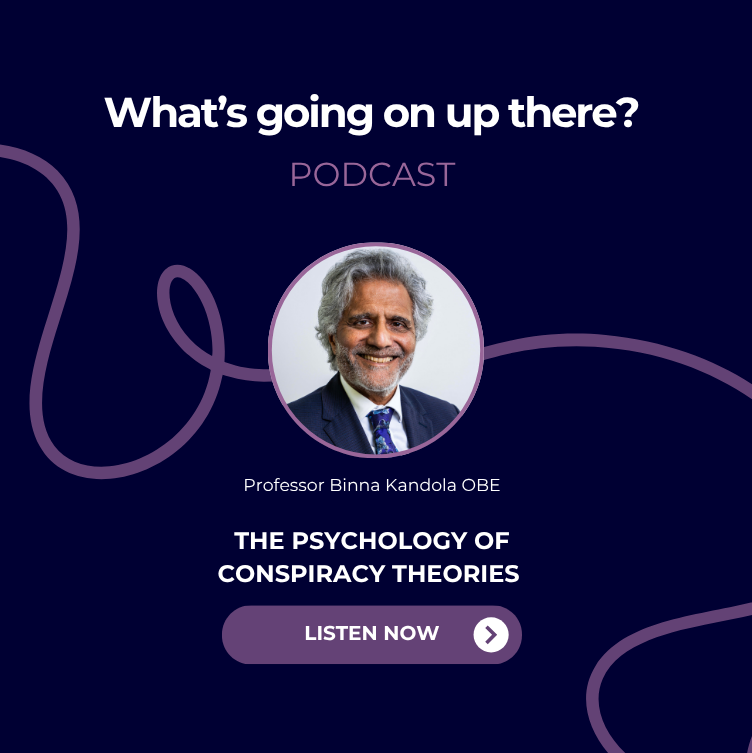
In this episode, Grace is joined by Professor Binna Kandola OBE to explore why these ideas are so appealing right now. Not by asking whether they are true or false, but by looking at what psychology tells us about how people think under uncertainty, threat, and distrust.
They talk about how conspiracy theories form, how they change over time, and, most importantly, what the research suggests helps reduce their pull.
Available on Apple Podcasts, Spotify, and all major podcast platforms.
Get the latest on DEI, effective recruitment, and leadership
development direct to your inbox.