

Skip to navigation Skip to content

Unconscious bias training

Say goodbye to bias in your business

Drive awareness and action to interrupt bias in behaviour and decision-making

Get in touch

Unconscious bias

Training Overview

3 Hour In-person or Virtual (live) session
Up to 20 participants
Bespoke Digital Tools
3 Packages to Choose From

Unconscious bias training that’s proven to change behaviour

It’s human to have bias. It’s normal.

What’s not normal is letting it interfere with vital decisions in the workplace. Without tackling bias, we undermine true meritocracy and stifle innovation.

Research shows that bias presents itself in everyday moments, often without us realising it.

Pearn Kandola’s Unconscious bias training enables participants to identify where these biases exist, in processes, language and behaviour.

Critically, our training goes beyond awareness raising and is proven to trigger behavioural change, equipping participants with practical strategies to mitigate unconscious bias.

This means that, by incorporating our Kandola+ proprietary digital tools – you can prove ROI by measuring the progress of participants.

Start making better decisions across your organisation.
Get in touch today

Our unconscious bias training packages

Pearn Kandola’s Unconscious bias training centres around an engaging and interactive 3-hour live workshop that covers everything participants need to know about unconscious bias.

Participants will learn to identify where these biases exist at work – in processes, language and behaviour – and our powerful proprietary tools will crucially help them to understand their own biases.

From here, they will be motivated and equipped with practical strategies to tackle unconscious bias in the workplace.

Package options

All of our packages include a 3-hour workshop designed and delivered by trained business psychologists.

You have the option to run the workshop in-person or for it to be delivered virtually in a live online setting (e.g. Zoom or Teams).

Each package is based on a limit of 20 participants to ensure maximum engagement, interaction and impact for behavioural change.

Standard

Pre-programme communications
3 hour bias awareness workshop
Implicit Association Tests
Personalised action plan for each participant
Access to PK:NEGATE, an online exercise proven to weaken race and gender stereotypes
Manager team talks
Bias-free decision toolkits to avoid bias in recruitment, promotion and management decisions
Email nudges to maintain focus and momentum following the live session

Enhanced

Pre-programme communications
3 hour bias awareness workshop
Implicit Association Tests
Personalised action plan for each participant
Access to PK:NEGATE, an online exercise proven to weaken race and gender stereotypes
Manager team talks
Bias-free decision toolkits to avoid bias in recruitment, promotion and management decisions
Email nudges to maintain focus and momentum following the live session

Ultimate

Pre-programme communications
3 hour bias awareness workshop
Implicit Association Tests
Personalised action plan for each participant
Access to PK:NEGATE, an online exercise proven to weaken race and gender stereotypes
Manager team talks
Bias-free decision toolkits to avoid bias in recruitment, promotion and management decisions
Email nudges to maintain focus and momentum following the live session

What Our Unconscious Bias Training Covers

Learners will:

  • Understand what unconscious bias is and how it differs from conscious prejudice
  • Be able to spot bias when it happens around them
  • Have insight into their own biases and implicit associations
  • Have practical strategies to overcome bias
  • Be embedding new behaviours into their daily decision making and interactions
  • Be able to demonstrate how their behaviour is less biased as a result of the training

Our unconscious bias training is trusted by

“I wanted to feedback on Friday’s session and I have to say genuinely it was brilliant. Stephan did a great job of delivering the right mix of theory and practical that really tested the team in several ways. The infrastructure of breaking into groups, slides, quality of the session was great and he shared the content as promised immediately after. I would thoroughly recommend this to any part of our business. My team are a mix of time served, experienced L5s who can be a bit challenging at times and each of them has written to me afterwards saying how good they thought the session was excellent.”
Jordan MaskellCorporate Sector Development ManagerNFU Mutual

Our approach to unconscious bias training

As a firm of business psychologists, our work is rooted in over 40 years of research and evidence-based practice that you can actually measure.

Our workshops focus on three core areas to deliver lasting change:

Insight
Awareness
Action

Insight

Research shows that without examining personal biases, people are unlikely to take action to address them.

During this stage, participants use our Kandola+ implicit association tests (IATs) to understand what attributes they closely associate with certain groups to uncover unconscious biases.

Understanding our own biases is a crucial first step to addressing them.

Awareness

The awareness stage is highly interactive and engaging and brings together the science of bias and real-world business examples.

This part of the workshop focuses on educating participants and covers the fundamentals such as:

  • What is unconscious bias?
  • How does it differ from conscious prejudice?
  • The impact of bias on people decisions such as hiring, feedback and promotion
  • Conditions where bias is likely to thrive
  • Biases we may hold as individuals
  • Practical strategies to interrupt bias

Action

Research shows that people are more motivated to take action to address bias once they have greater insight into their own biases.

It’s this stage of the workshop where participants will leverage this personal understanding of their own biases in order to take action.

This stage guides participants on practical actions they can take to ensure their decisions are as fair and inclusive as possible.

Please note that the tools and resources used in this phase will vary depending on your chosen package (see our packages section for more information).

Why choose Pearn Kandola’s unconscious bias training?

92
%
Would recommend
89
%
Learners take action
Proven results
Accredited psychologists
Holistic approach

Proven results

Whilst raising awareness is important – organisations choose us because of our research-rooted, evidence-based approach, proven to trigger behaviour change.

If you’re looking to run an off-the-shelf programme in order to tick a box, then this session isn’t for you.

If you want to prove ROI, trigger and measure behavioural change, then you’re in the right place – 89% of our participants are shown to take action following their training.

Our mission is to make the workplace, and thus the world, fairer.

Unconscious bias exists, that’s a fact. By working with organisations to raise awareness – and most importantly – take action to mitigate it, we can help work towards a true meritocracy, where decisions are made based on evidence, not personal feeling.

Accredited psychologists

All of our workshops are designed and delivered by our team of experienced, qualified business psychologists.

Psychology is the scientific study of the mind and human behaviour. In short, we know how people work.

We recognise that everyone has different motivators – and we use this information to target each individual’s personal strengths and weaknesses to trigger behavioural change.

With four decades of in-house research behind us, we offer a truly expert, evidence-based approach, one that delivers results.

Holistic approach

We’ve been consulting in leadership development, assessment and inclusion since 1984.

Our services are rooted in our in-house research and over forty years’ expertise, eliminating assumptions and minimising bias.

As a firm of business psychologists, we see your organisation as a whole, across departments and seniority levels. We consider where you were, where you are now – and where you want to be.

Working across more than 90 countries globally, we understand that different cultures demand different approaches, and factor cultural intelligence into our services to ensure you can drive progress on a modern, global scale.

So, whether you’re training your senior leaders and hiring managers to eliminate bias, assessing graduates or succession planning, we’re with you every step of the way.

Frequently asked questions

What is unconscious bias, and how does it affect the workplace?

The moment we set eyes on someone, we begin to form an impression of them that is based on the colour of their skin, their gender – even their name. This is unconscious bias.

It’s human nature, we all have it. So, what’s the problem?

Research shows that bias presents itself in everyday moments, often without us realising it.

So how does this affect the workplace? Primarily through our decision-making.

Without realising it, for example, we might be more likely to give an important project to someone is more like us, over someone who – based on their skills and performance – would do a better job of delivering it.

Tackling our unconscious biases means we can ensure our decisions are based on merit and facts, not feelings – for more effective decision making in the workplace – leading to improved performance, talent identification and retention.

What types of unconscious bias are most common?

There are several forms of unconscious bias, such as:

  • Subjective evaluation
  • Recency bias
  • Stereotyping
  • Confirmation bias
  • Groupthink

To learn more about these and their implications in the workplace, read our rticle by Dr Ashley Williams.

How can businesses identify and mitigate unconscious bias?

There are a number of methods that can be used to help identify unconscious bias in the workplace.

Firstly, understanding what types of unconscious bias exist, and how they might manifest in the workplace – is crucial for individuals to learn how to identify it, whether in themselves, others or even in processes and paperwork.

On an individual level, there are ways we can learn about our own biases, such as through an implicit association test (IAT), which we use during our Unconscious Bias programme.

You might also undertake a more direct, proactive approach, such as through a live bias review, where a business psychologist can observe a meeting in your workplace and identify, live, where unconscious bias may be impacting a business decision.

The opportunity to catch bias in action, and offer direct intervention, is highly effective in helping organisations understand – in the moment – how unconscious bias can occur – and be tackled.

Overall, the main takeaway is that organisations should be trained in how to first identify, then mitigate unconscious bias effectively to help prevent it from impacting crucial business decisions.

Is unconscious bias training effective?

While raising awareness of unconscious bias is important – awareness raising alone is unlikely to be effective when it comes to triggering change.

Our training is designed to target each individual attendee, first raising awareness, providing insights into their own behaviour, and clear actions they can to follow to effect measurable behavioural change.

The result? 89% of our participants are shown to take action following their training.

Ready to make change in your organisation? Get in touch today.

What are the legal implications of unconscious bias under UK law?

While there is no direct reference to unconscious bias under UK law, there are still potential legal implications of unaddressed unconscious bias in the workplace.

Under the Equality Act (2010), individuals are protected from discrimination based on the nine protected characteristics:

  • Age
  • Disability
  • Gender reassignment
  • Marriage/civil partnership
  • Pregnancy/maternity
  • Race
  • Religion/belief
  • Sex
  • Sexual orientation

Whether intentional or not, if unconscious bias is not addressed, and leads to an employee being treated less favourably or harassed because of their protected characteristic, then a claim could be made against an organisation under the Equality Act (2010).

There are some fantastic resources by law firms exploring the complexities of this that are worth reading or listening to, such as this podcast from TLT LLP.

How does unconscious bias impact employee wellbeing and retention?

Unconscious bias can impact your organisation – and its people – in several ways.

Without understanding how and why our biases impact our decision-making, we can’t stop them from interfering with important decisions, such as who is considered ‘talent’ and should be hired, promoted or developed.

If decisions aren’t made based on evidence, they aren’t truly meritocratic. Unconscious biases mean that top talent in your organisation could be overlooked, leading to frustration and lack of engagement, and ultimately higher attrition.

Not only this – but if employees are treated unfairly as a result, perhaps treated more harshly than others, or simply excluded, then their wellbeing and performance is likely to suffer as a result.

Ultimately, tackling unconscious bias will benefit not only your organisation, through fair and effective decision making, but employee wellbeing and retention too.

Get started with a quote today.

Related services

Inclusive Cultures

Active bystander

Empower your team to intervene effectively in challenging situations, fostering a culture of shared responsibility, empowerment and support…

Inclusive Cultures

Inclusive leader

Lead the way for inclusion. 30,000+ leaders have already benefitted from our inclusive leader workshops. Empower your leaders to inspire, encourage and innovate.

Inclusive Cultures

DEI audit & review

How diverse and inclusive is your organisation? Where it thinks it is on its DEI journey and where it truly stands can be poles apart…

Free consultation with a
business psychologist

Ready to tackle unconscious bias and unlock the benefits of a more inclusive culture, with better decision making?

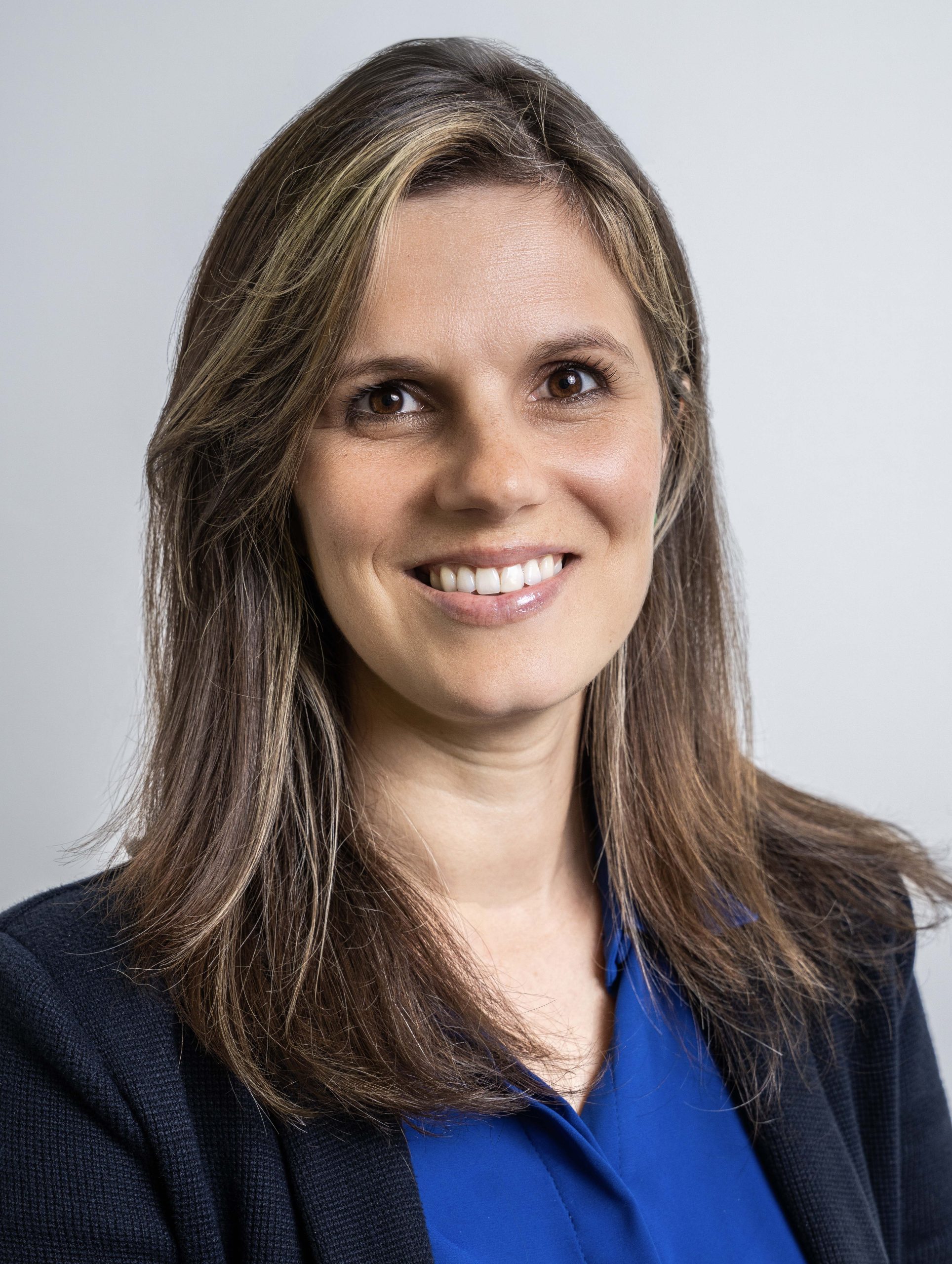
Clare Reynolds, Principal Psychologist

10 years’ experience

Our inclusion insights

New webinar: Psychological safety in healthcare
Insights

New webinar: Psychological safety in healthcare

Read more
BP, Cabot Credit Management, and Puma Capital group join as sponsors for Psychological Safety Week
Insights

BP, Cabot Credit Management, and Puma Capital group join as sponsors for Psychological Safety Week

Read more
Charity for Civil Servants joins as sponsor for Pearn Kandola’s Psychological Safety Week
Insights

Charity for Civil Servants joins as sponsor for Pearn Kandola’s Psychological Safety Week

Read more

Start a conversation

Not sure what you need? Get in touch with our team of expert psychologists to discuss your organisational challenges and goals, and we can put together a bespoke suite of services to support you.

This field is for validation purposes and should be left unchanged.